Deals - Dashboard for contract tracking
A modern, backend internal dashboard for contract + proposal
tracking for Reset Tech.
Strategy
Design
My Role
Design Lead
The Problem
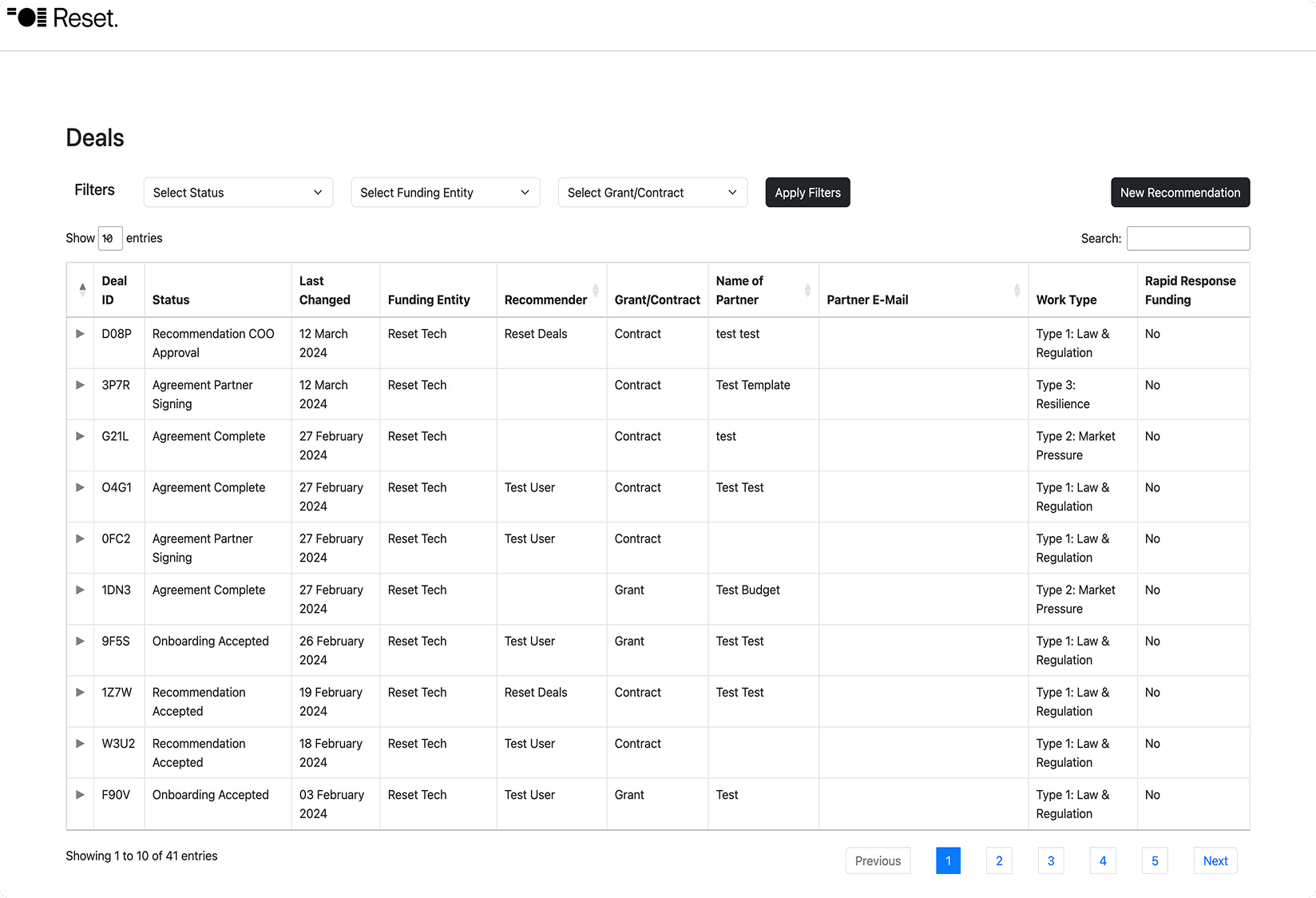
The current contract management dashboard has transitioned from a facilitator to a primary operational bottleneck.
Due to a combination of UI bloat, data unreliability, and poor notification design, the Contract Team is overwhelmed by noise and unable to prioritize critical approvals, resulting in a significantly slowed contract pipeline.
Contributions
Lead Designer - Prototyping - Interaction Design - Stakeholder Alignment - Dev Collaboration
Platforms
Desktop Web
Overview
The product team was asked to transform a fragmented internal dashboard from an operational bottleneck into a streamlined catalyst. By stripping away legacy feature bloat and stabilizing backend integrations, the team replaced user frustration with a data first workflow.
As Lead Product Designer, I guided the team to eliminate unnecessary complexity and enhance notification prominence, creating a high density, "glanceable" interface. This strategic overhaul drove a 20% boost in team efficiency, allowing for faster contract analysis and improved stakeholder trust.
Previous Dashboard
Solution
The final product was a complete technical and visual overhaul, improving backend integration to ensure that every notification was timely and every data point remained accurate and actionable.
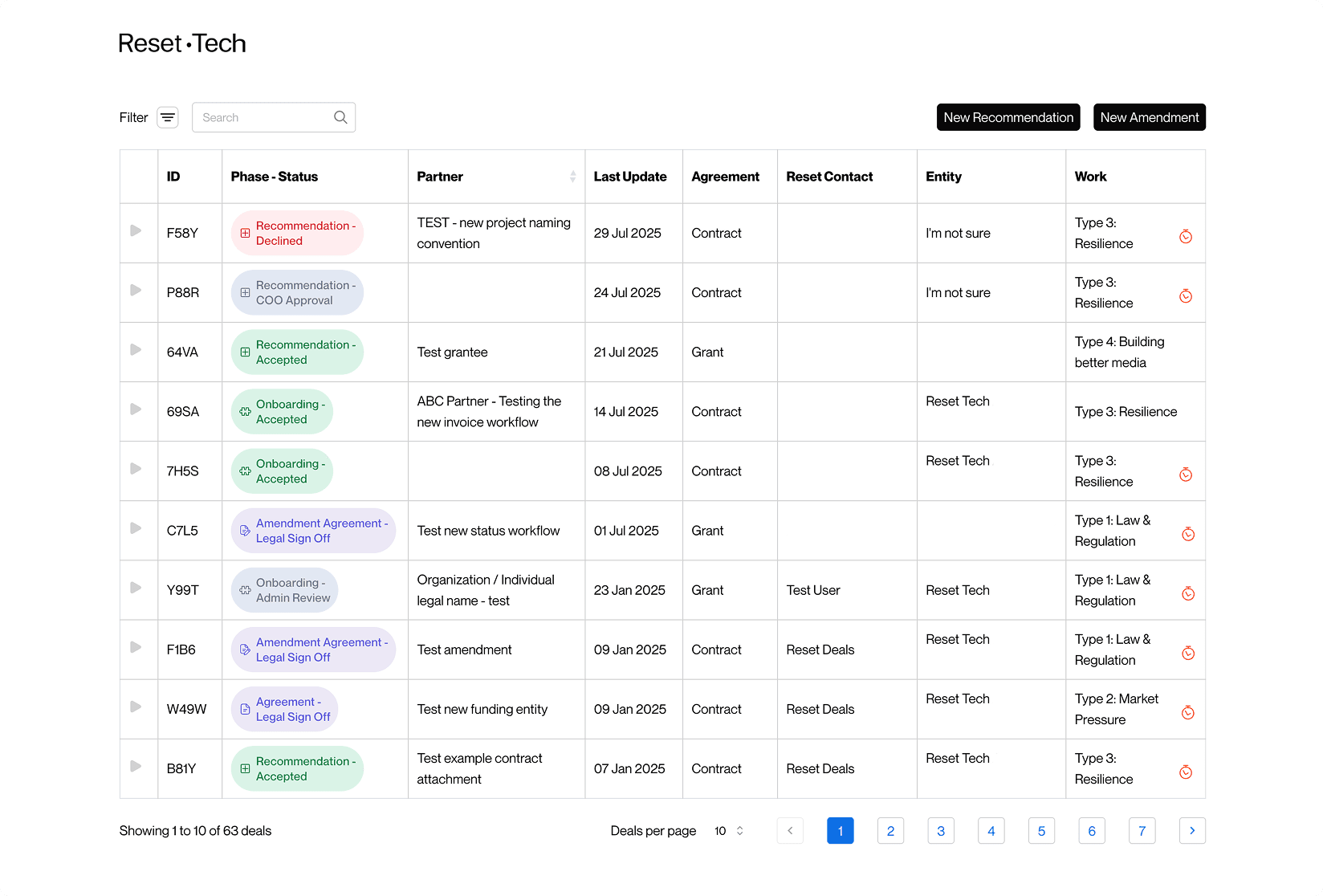
Certain aspects of this dashboard have been omitted due to sensitive information within
Home
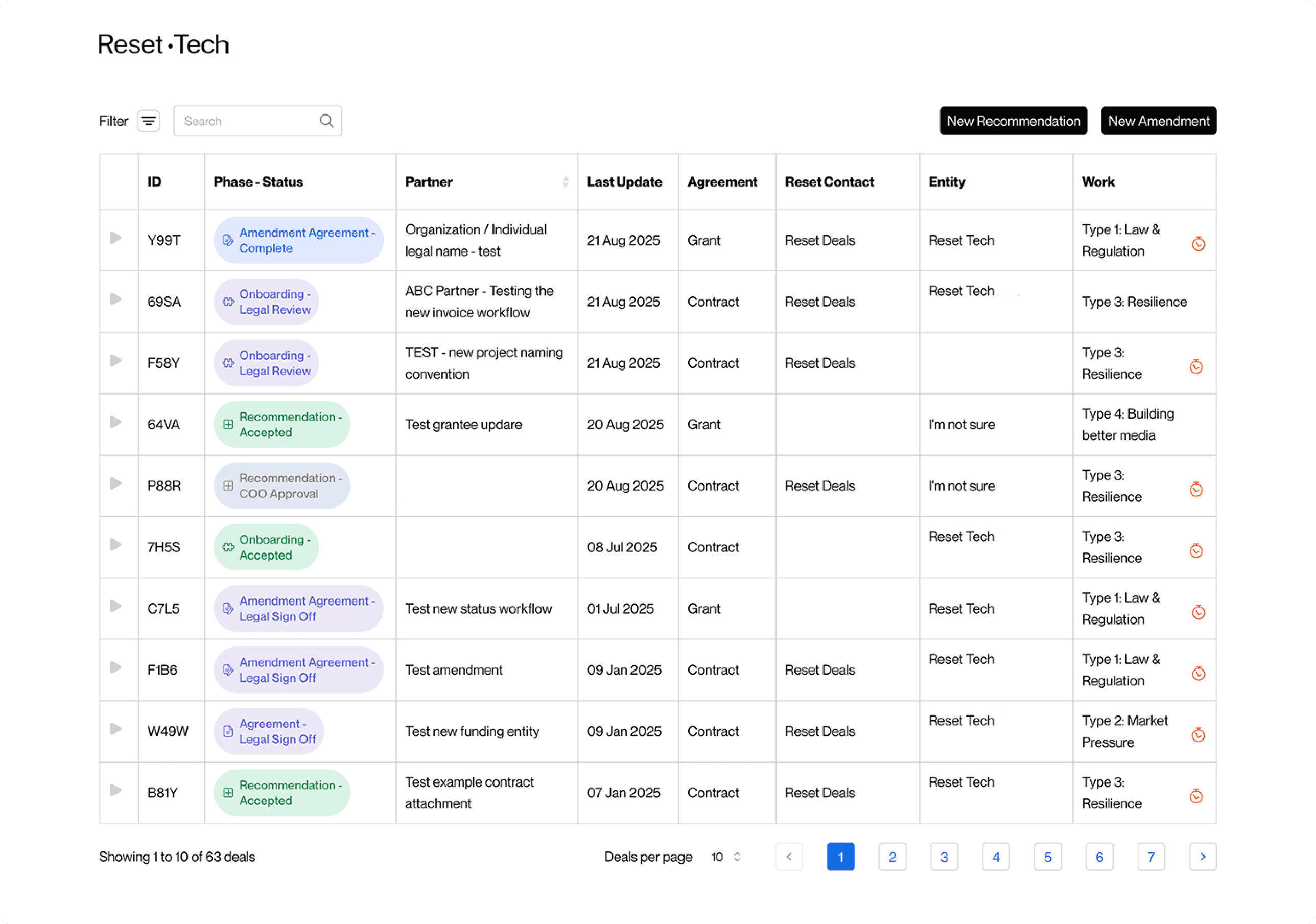
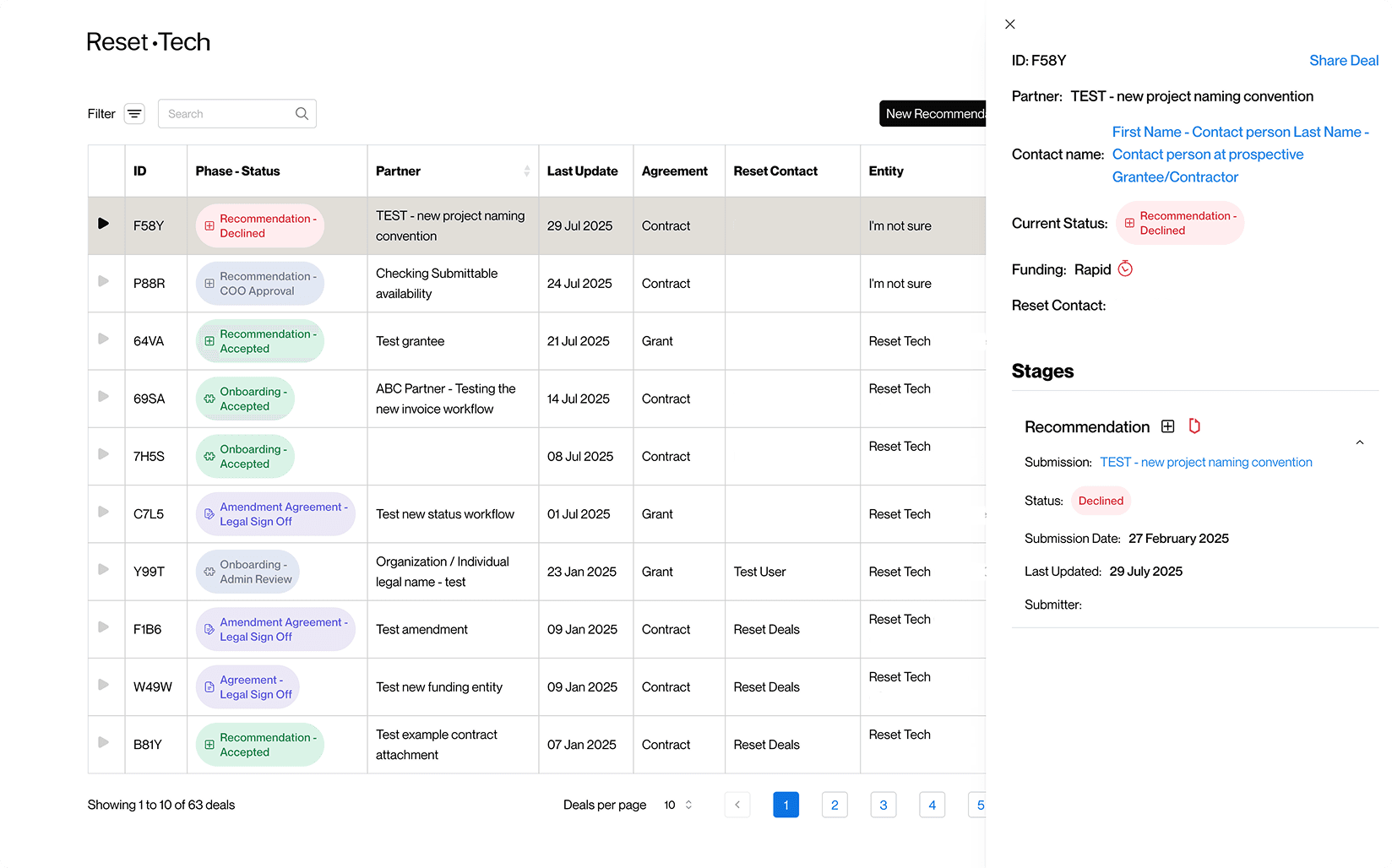
The home screen provides a high-density data grid and color coded status pills to provide glanceable, real time overview of active contract lifecycles.
Filter
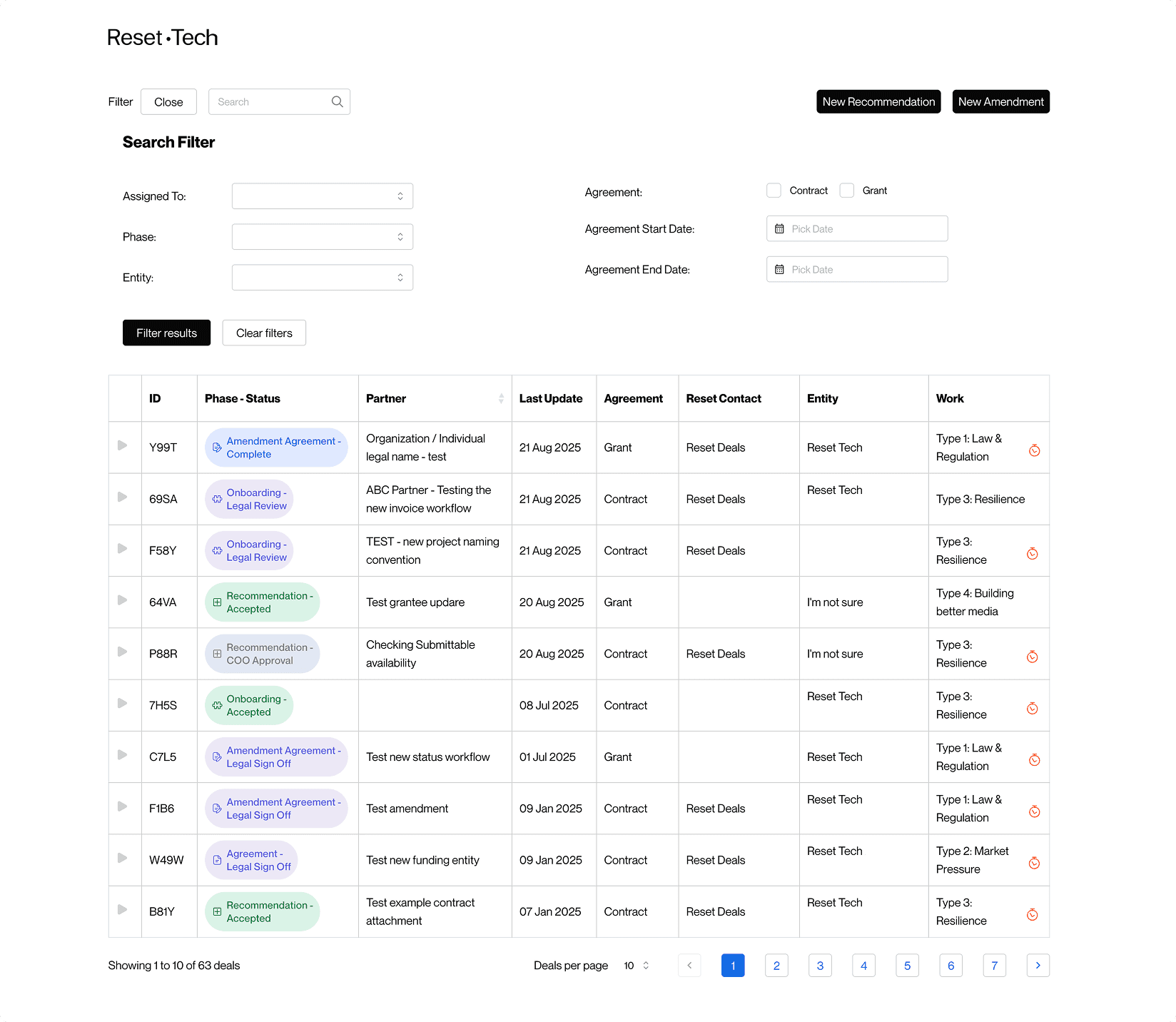
I built a global search and collapsible filter system, this allowed the contract team to drill down into specific data sets within the dashboard.
Side-drawer
By integrating a contextual side drawer for deep dive information, the interface minimizes "click debt" and allows the contract team to manage deal flows with more efficiency.
Research
Through a week of discovery, I identified 'View Debt' a cumulative loss of focus caused by fragmented navigation and 'Notification Blindness.' These insights highlighted a critical need for a persistent anchor, driving our shift toward a glanceable architecture that keeps users grounded while making 60+ deals immediately actionable.
User Pain Points
Root Cause
Design Solution
Information Overload
60% of the screen was occupied by "rarely used" data fields, obscuring critical deal IDs.
Curated Power Table: A high-density grid focused only on essential columns like "Phase" and "Agreement"
Notification Blindness
"Wall of text" updates caused users to miss blocked contracts and pending sign-offs.
Functional Color System: High-visibility status "pills" using distinct colors for instant scannability.
Loss of Context
Moving between pages caused users to lose their place in the list of active and non active deals.
The "Anchor" Layout: Maintaining the main list as a background anchor while utilizing overlays for deeper tasks.
Legibility Fatigue
Small, technical data (like IDs "F58Y") was difficult to read in the legacy system's font
Typography Overhaul: Using Neue Montreal for its modern neutrality and superior legibility at small sizes.
Design Approach
The overall approach transitioned the dashboard from a feature-heavy legacy system to a lean, data-first architecture by stripping away unnecessary elements and prioritizing operational clarity.
Typography System
I selected Neue Montreal for its modern neutrality and legibility in data dense environments.
By using varied weights to anchor Deal IDs against secondary metadata, I established a hierarchy
that minimizes cognitive fatigue and makes complex tracking unmistakable and highly scannable.
Neue Montreal
Color Choices
I paired a vibrant Action Blue for interactions with a muted, functional palette. Sage, Red, and Lavender for status indicators. By reserving saturated accents for critical updates against a neutral foundation, I eliminated visual noise, allowing the team to assess the health of 60+ deals at a glance and focus strictly on high-priority approvals.
Icon Choices
I designed a suite of minimalist line icons to act as functional signposts without adding visual noise. By maintaining a light visual weight, these symbols improve scannability across deal phases and time sensitive tasks while reinforcing the dashboard’s clean, system oriented aesthetic.
Conclusion
The redesign transformed a text heavy bottleneck into a data first engine, increasing contract throughput by 20%. By eliminating "click debt" and feature bloat, I shifted the team from manual status hunting to high level operational management. This streamlined workflow did more than just reduce frustration, it accelerated feedback cycles and solidified Reset Tech’s relationships with external partners through faster, more reliable data oversight.
Deals - Dashboard for contract tracking
A modern, backend internal dashboard for contract + proposal
tracking for Reset Tech.
Strategy
Design
My Role
Design Lead
The Problem
The current contract management dashboard has transitioned from a facilitator to a primary operational bottleneck.
Due to a combination of UI bloat, data unreliability, and poor notification design, the Contract Team is overwhelmed by noise and unable to prioritize critical approvals, resulting in a significantly slowed contract pipeline.
Contributions
Lead Designer - Prototyping - Interaction Design - Stakeholder Alignment - Dev Collaboration
Platforms
Desktop Web
Overview
The product team was asked to transform a fragmented internal dashboard from an operational bottleneck into a streamlined catalyst. By stripping away legacy feature bloat and stabilizing backend integrations, the team replaced user frustration with a data first workflow.
As Lead Product Designer, I guided the team to eliminate unnecessary complexity and enhance notification prominence, creating a high density, "glanceable" interface. This strategic overhaul drove a 20% boost in team efficiency, allowing for faster contract analysis and improved stakeholder trust.
Previous Dashboard
Solution
The final product was a complete technical and visual overhaul, improving backend integration to ensure that every notification was timely and every data point remained accurate and actionable.
Certain aspects of this dashboard have been omitted due to sensitive information within
Home
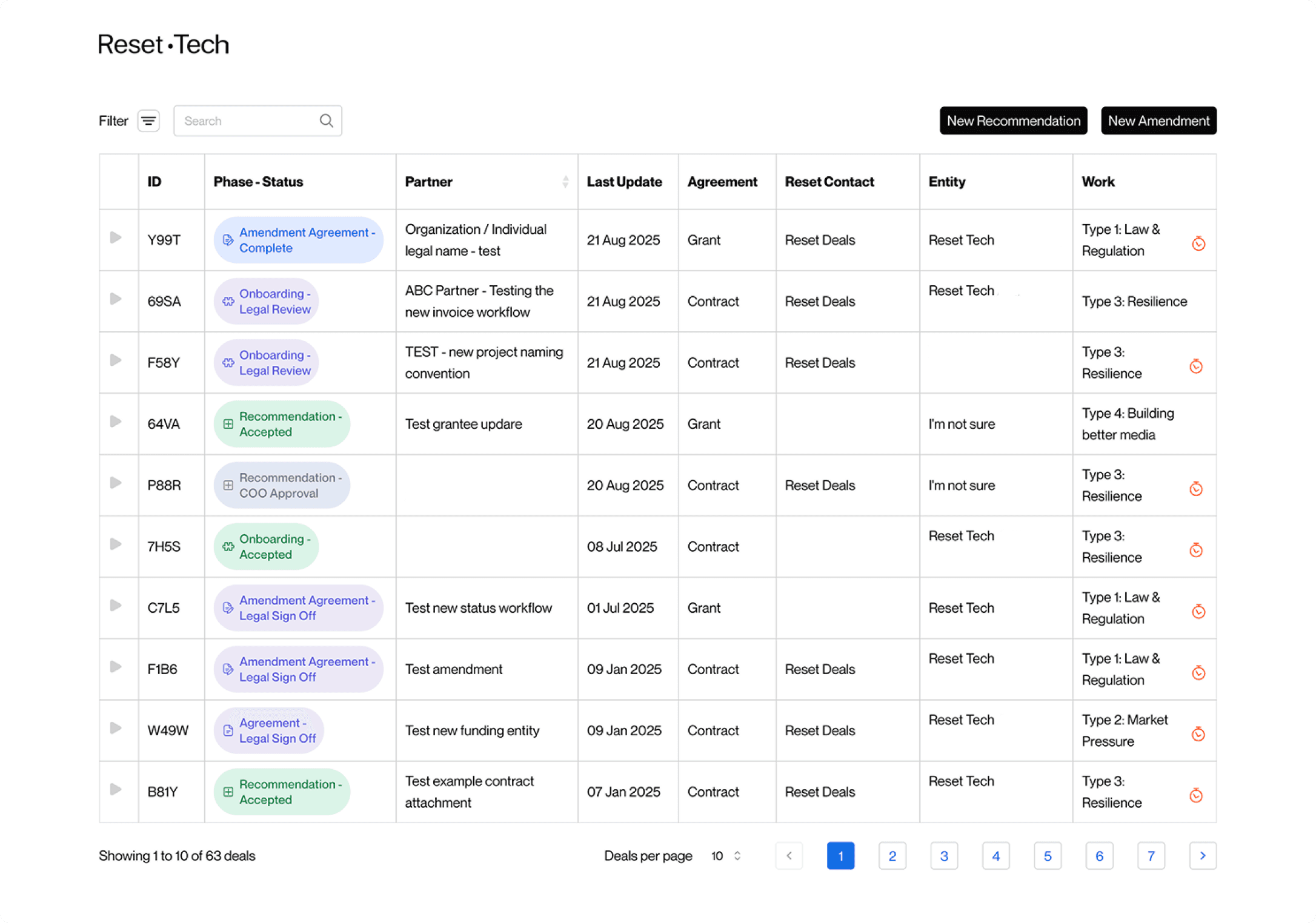
The home screen provides a high density data grid and color coded status pills to provide glanceable, real time overview of active contract lifecycles.
Filter
I built a global search and collapsible filter system, this allowed the contract team to drill down into specific data sets within the dashboard.
Side-drawer
By integrating a contextual side drawer for deep dive information, the interface minimizes "click debt" and allows the contract team to manage deal flows with more efficiency.
Research
Through a week of discovery, I identified 'View Debt' a cumulative loss of focus caused by fragmented navigation and 'Notification Blindness.' These insights highlighted a critical need for a persistent anchor, driving our shift toward a glanceable architecture that keeps users grounded while making 60+ deals immediately actionable.
User Pain Points
Root Cause
Design Solution
Information Overload
60% of the screen was occupied by "rarely used" data fields, obscuring critical deal IDs.
Curated Power Table: A high-density grid focused only on essential columns like "Phase" and "Agreement"
Notification Blindness
"Wall of text" updates caused users to miss blocked contracts and pending sign-offs.
Functional Color System: High-visibility status "pills" using distinct colors for instant scannability.
Loss of Context
Moving between pages caused users to lose their place in the list of active and non active deals.
The "Anchor" Layout: Maintaining the main list as a background anchor while utilizing overlays for deeper tasks.
Legibility Fatigue
Small, technical data (like IDs "F58Y") was difficult to read in the legacy system's font
Typography Overhaul: Using Neue Montreal for its modern neutrality and superior legibility at small sizes.
Design Approach
The overall approach transitioned the dashboard from a feature heavy legacy system to a lean, data first architecture by stripping away unnecessary elements and prioritizing operational clarity.
Typography System
I selected Neue Montreal for its modern neutrality and legibility in data dense environments. By using varied weights to anchor Deal IDs against secondary metadata, I established a hierarchy that minimizes cognitive fatigue and makes complex tracking unmistakable and highly scannable.
Neue Montreal
Color Choices
I paired a vibrant Action Blue for interactions with a muted, functional palette. Sage, Red, and Lavender for status indicators. By reserving saturated accents for critical updates against a neutral foundation, I eliminated visual noise, allowing the team to assess the health of 60+ deals at a glance and focus strictly on high priority approvals.
Icon Choices
I designed a suite of minimalist line icons to act as functional signposts without adding visual noise. By maintaining a light visual weight, these symbols improve scannability across deal phases and time sensitive tasks while reinforcing the dashboard’s clean, system oriented aesthetic.
Conclusion
The redesign transformed a text-heavy bottleneck into a data first engine, increasing contract throughput by 20%. By eliminating "click debt" and feature bloat, I shifted the team from manual status hunting to high-level operational management. This streamlined workflow did more than just reduce frustration, it accelerated feedback cycles and solidified Reset Tech’s relationships with external partners through faster, more reliable data oversight.
Deals - Dashboard for contract tracking
Strategy
Design
A modern, backend internal dashboard for contract + proposal tracking for Reset Tech.
My Role
Design Lead
The Problem
The current contract management dashboard has transitioned from a facilitator to a primary operational bottleneck.
Due to a combination of UI bloat, data unreliability, and poor notification design, the Contract Team is overwhelmed by noise and unable to prioritize critical approvals, resulting in a significantly slowed contract pipeline.
Contributions
Lead Designer - Prototyping - Interaction Design - Stakeholder Alignment - Dev Collaboration
Platforms
Desktop Web
Overview
The product team was asked to transform a fragmented internal dashboard from an operational bottleneck into a streamlined catalyst. By stripping away legacy feature bloat and stabilizing backend integrations, the team replaced user frustration with a data first workflow.
As Lead Product Designer, I guided the team to eliminate unnecessary complexity and enhance notification prominence, creating a high density, "glanceable" interface. This strategic overhaul drove a 20% boost in team efficiency, allowing for faster contract analysis and improved stakeholder trust.
Previous Dashboard
Solution
The final product was a complete technical and visual overhaul, improving backend integration to ensure that every notification was timely and every data point remained accurate and actionable.
Certain aspects of this dashboard have been omitted due to sensitive information within
Home
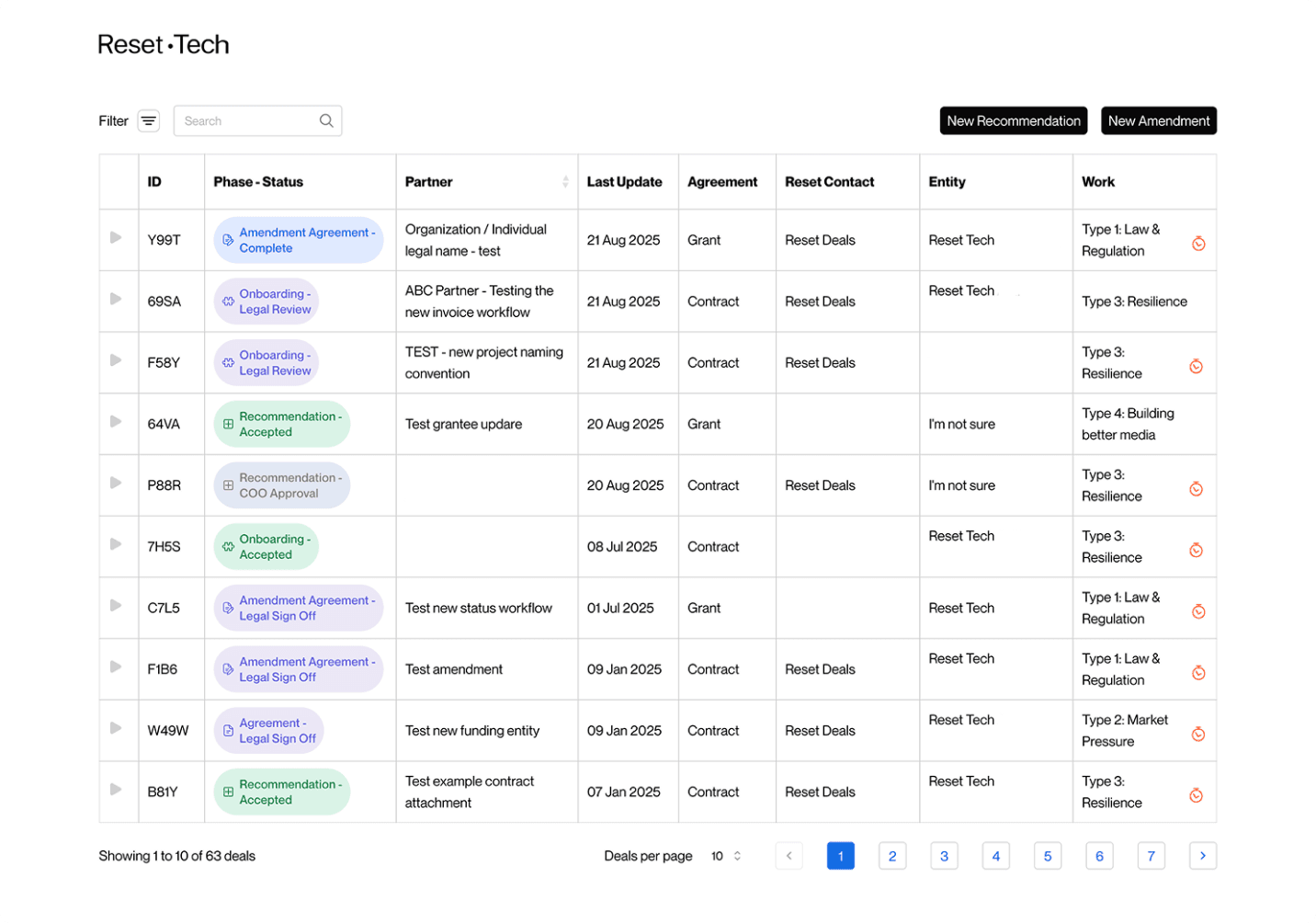
The home screen provides a high density data grid and color coded status pills to provide glanceable, real time overview of active contract lifecycles.
Filter
I built a global search and collapsible filter system, this allowed the contract team to drill down into specific data sets within the dashboard.
Side-drawer
By integrating a contextual side drawer for deep dive information, the interface minimizes "click debt" and allows the contract team to manage deal flows with more efficiency.
Research
Through a week of discovery, I identified 'View Debt' a cumulative loss of focus caused by fragmented navigation and 'Notification Blindness.' These insights highlighted a critical need for a persistent anchor, driving our shift toward a glanceable architecture that keeps users grounded while making 60+ deals immediately actionable.
User Pain Points
Information Overload
Root Cause: 60% of the screen was occupied by "rarely used" data fields, obscuring critical deal IDs.
Design Solution
Curated Power Table: A high-density grid focused only on essential columns like "Phase" and "Agreement"
Notification Blindness
Root Cause: "Wall of text" updates caused users to miss blocked contracts and pending sign-offs.
Design Solution
Functional Color System: High-visibility status "pills" using distinct colors for instant scannability.
Loss of Context
Root Cause: Moving between pages caused users to lose their place in the list of active and non active deals.
Design Solution
The "Anchor" Layout: Maintaining the main list as a background anchor while utilizing overlays for deeper tasks.
Legibility Fatigue
Root Cause: Small, technical data (like IDs "F58Y") was difficult to read in the legacy system's font
Design Solution
Typography Overhaul: Using Neue Montreal for its modern neutrality and superior legibility at small sizes.
Design Approach
The overall approach transitioned the dashboard from a feature heavy legacy system to a lean, data first architecture by stripping away unnecessary elements and prioritizing operational clarity.
Typography System
I selected Neue Montreal for its modern neutrality and legibility in data dense environments. By using varied weights to anchor Deal IDs against secondary metadata, I established a hierarchy that minimizes cognitive fatigue and makes complex tracking unmistakable and highly scannable.
Neue Montreal
Color Choices
I paired a vibrant Action Blue for interactions with a muted, functional palette, Sage, Red, and Lavender for status indicators. By reserving saturated accents for critical updates against a neutral foundation, I eliminated visual noise, allowing the team to assess the health of 60+ deals at a glance and focus strictly on high priority approvals.
Icon Choices
I designed a suite of minimalist line icons to act as functional signposts without adding visual noise. By maintaining a light visual weight, these symbols improve scannability across deal phases and time sensitive tasks while reinforcing the dashboard’s clean, system oriented aesthetic.
Conclusion
The redesign transformed a text heavy bottleneck into a data first engine, increasing contract throughput by 20%. By eliminating "click debt" and feature bloat, I shifted the team from manual status hunting to high level operational management. This streamlined workflow did more than just reduce frustration it accelerated feedback cycles and solidified Reset Tech’s relationships with external partners through faster, more reliable data oversight.